Skip to content

Build a Workforce That Flexes with Demand

Match staffing supply with demand across your entire workforce without sacrificing control, cost, or clinician experience.

Hallmark’s Flexible Workforce solution helps health systems predict labor demand, intelligently deploy staff across all labor types, and automate scheduling, so leaders can reduce labor expense, improve coverage, and give clinicians the flexibility they’re asking for.

Section-3-Iphone-mockup

Workforce Is a Structural and Endemic Challenge

Healthcare workforce pressure isn’t temporary, it’s structural. Health systems are facing rising labor costs, persistent shortages, and growing clinician burnout, all while demand fluctuates daily.  Today, most organizations are still staffing reactively, using average daily census, static schedules, spreadsheets, and manual coordination because they lack the intelligence to plan accurately. 

The realities we can’t ignore; labor expense growth continues to outpace inflation, driven by wage increases and contract labor reliance.  

$

0

B

Contract labor spend (locum, nursing, allied) exceeds $50B annually
0

%

of nurses and 48% of physicians report symptoms of burnout

#

0
Flexibility is now a top driver of retention, with many clinicians seeking alternative work models
0

%

of physicians who changed jobs in 2024 moved into locum roles, prioritizing control over schedules and workload

The Solution:
A
 Flexible Workforce That Matches Supply to Demand

Hallmark’s Flexible Workforce solution helps health systems move beyond reactive scheduling to intelligently match labor supply with real-time demand across every category of labor. 

By combining workforce intelligence, predictive demand signals, and AI-enabled enterprise-wide scheduling, Hallmark enables leaders to deploy the right resource, at the right time, at the right cost; without increasing administrative burden.

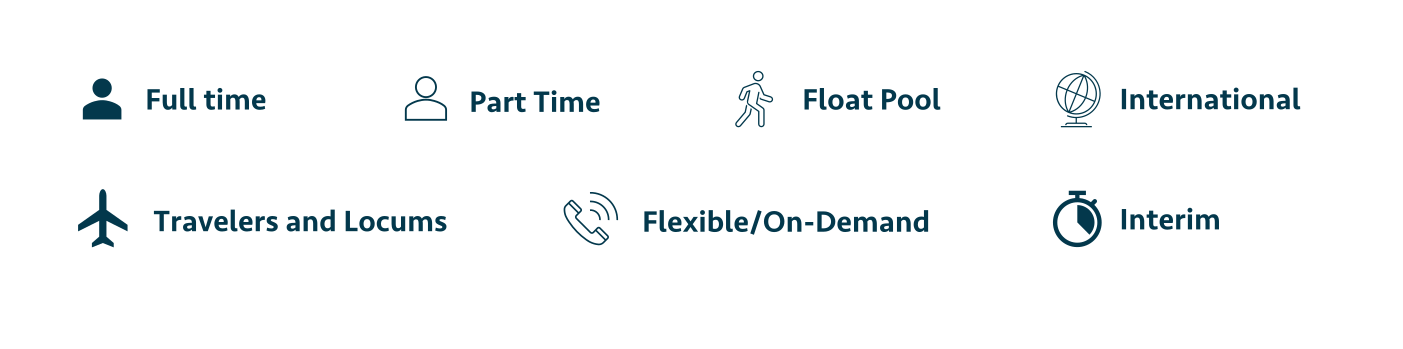
Hallmark enables flexible staffing across: 

Hallmark enables flexible staffing across-02

Flexible Workforce Platform Capabilities

Contract-Details
Internal Float Pool
Hallmark provides the technology health systems need to create and run a smarter internal float pool. The platform makes it possible to centrally manage internal flexible staff and intelligently match them to open shifts based on skills, credentials, availability, and real-time demand.
By bringing float pool staffing into the same system used for forecasting, scheduling, and workforce intelligence, organizations gain a clear, scalable way to deploy internal resources before turning to external labor. The result is better coverage, lower labor costs, and a more flexible experience for clinicians—without adding complexity or manual coordination.
 
Provider-Alignment
Workforce Intelligence
Workforce decisions shouldn’t be made in isolation. Hallmark’s Workforce Intelligence brings together contingent spend, staffing patterns, utilization, and workforce mix into a single, system-wide view. Leaders gain clear insight into where labor dollars are going, which roles and units are under pressure, and where cost-saving or redeployment opportunities exist. Including:
  • Contingent labor spend visibility
  • Physician, nurse, and care team insights
  • Identification of cost-saving and utilization opportunities
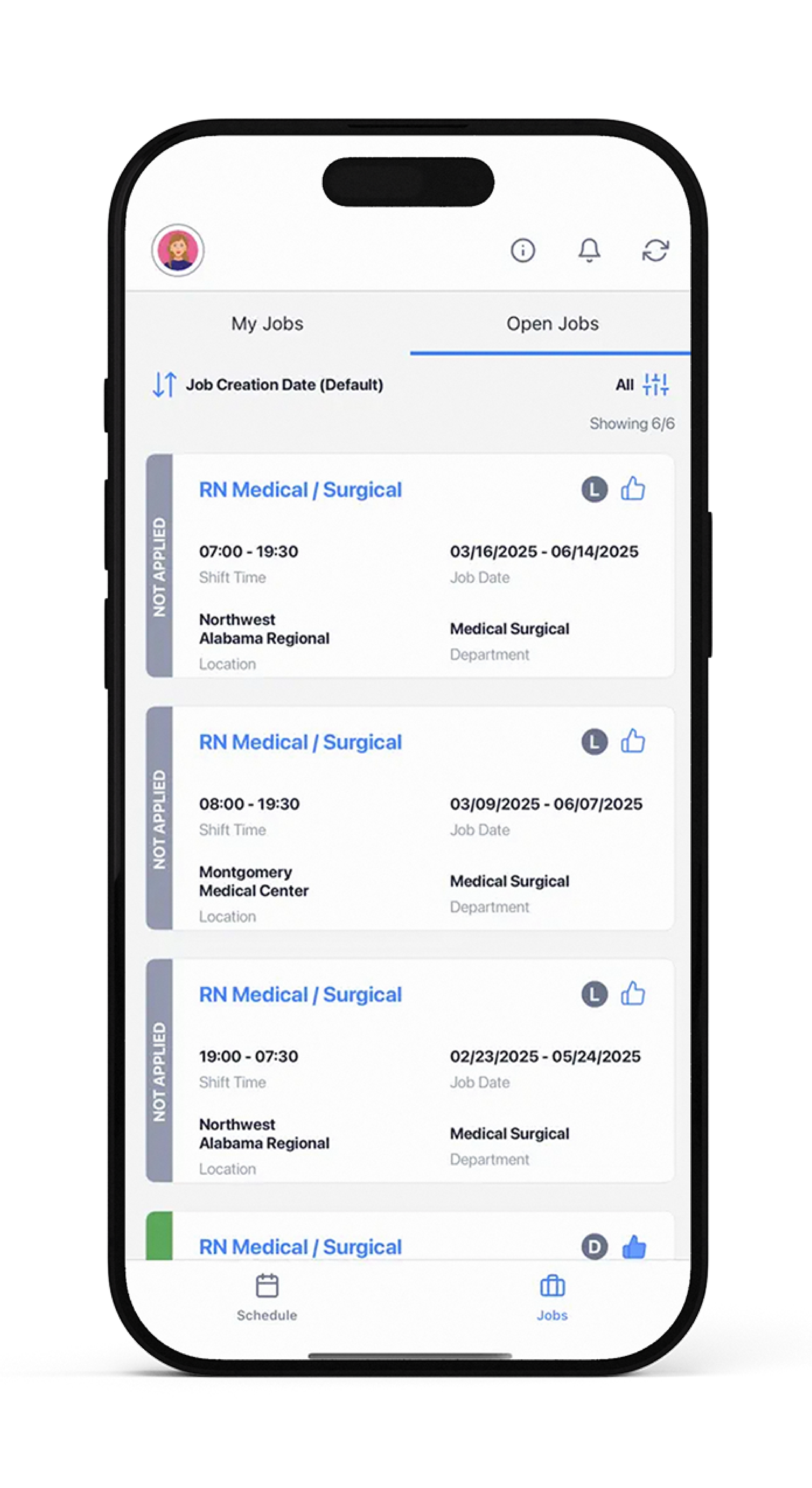
Provider & Staff Mobile App

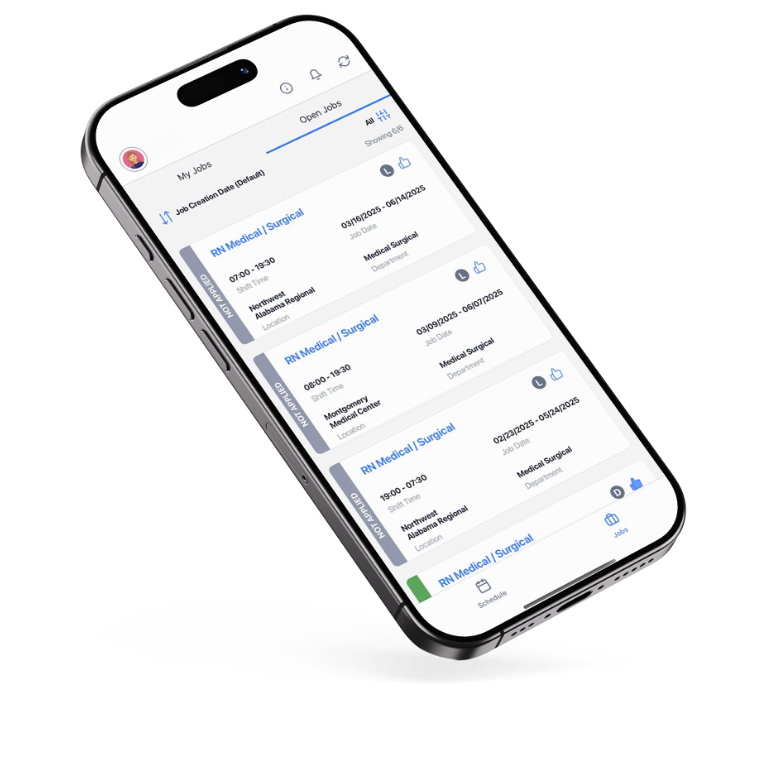
Flexibility has to work for clinicians, not just administrators. Hallmark’s mobile app gives staff real-time access to schedules, open shifts, and availability, empowering them to manage their work without constant manager involvement. By putting scheduling directly in clinicians’ hands—within defined guardrails—health systems reduce front-line coordination, improve engagement, and create a more responsive staffing experience that aligns with how clinicians want to work today.

  • Enables staff to manage schedules without manager intervention
  • Improves engagement while dramatically reducing front-line coordination
  • Automated interviews with AI-based pre-screening and summarization
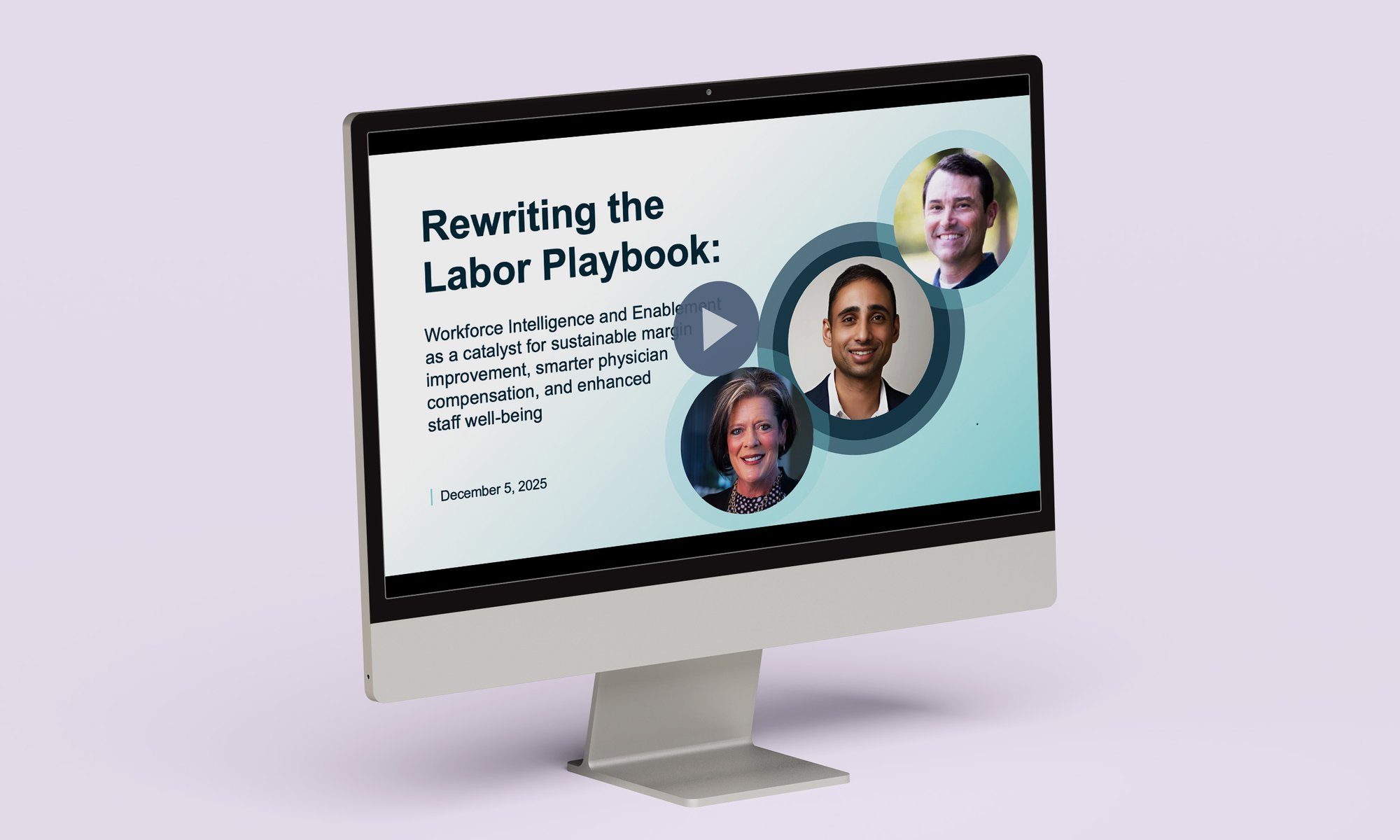
How Health Systems Use Flexible Workforce to Solve Real Problems
Health systems use Hallmark to replace averages with visibility and reactive staffing with proactive control.

Reduce Overtime, Agency Use, and Burnout

By forecasting demand and flexing internal resources first, organizations reduce expensive last-minute staffing and relieve pressure on permanent staff. Leaders from Ascension share their experiences in this in-depth interview. The result: reduction in attrition, higher fill rates, optimized shift coverage and reduced agency rates and utilization.

Beckers-Webinar-2025-Mockup
Hallmark-Changemakers-Great-Rivers-2026-LP-02

Improve Staffing Coverage Without Overpaying

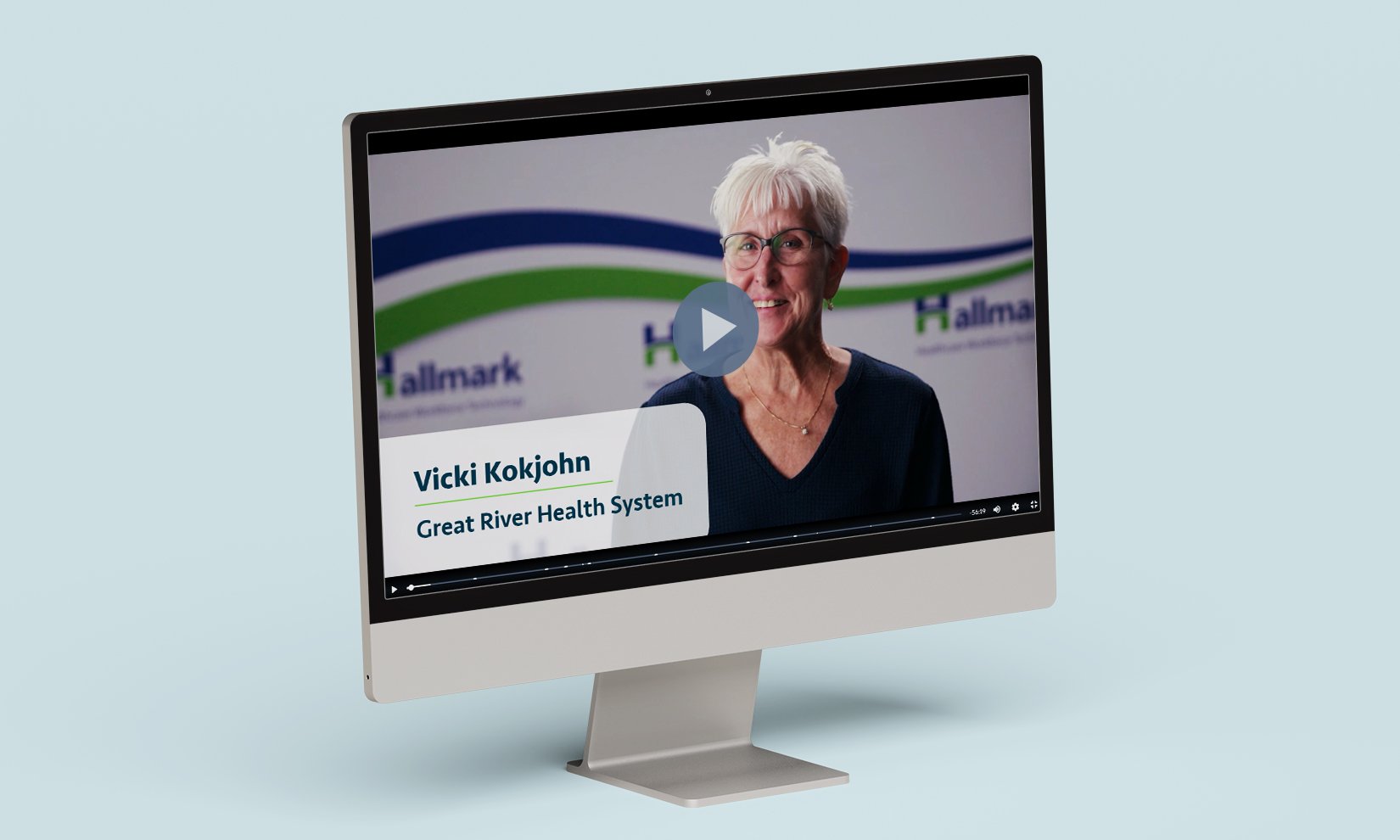
Predictive forecasting and intelligent scheduling help leaders right-size coverage before over- or under-staffing occurs. Vicki Kokjohn from Great River Health System explains more in this short video. The result: reduced administrative scheduling burden, optimized shift coverage.

Reduce Agency Spend and Regain
Workforce Control

By centralizing flexible staffing and prioritizing internal resources, organizations can significantly reduce agency reliance while improving visibility into where labor dollars are going. At Arnot Health, leaders share how moving to a more strategic, technology-enabled workforce model helped them regain control over staffing decisions, reduce agency spend, and create a more sustainable approach to coverage across their system. The result: Fill rates that increased to 99% fill rate and more than $2 million saved on agency costs annually.

Hallmark-Changemakers-Video-Mockup-Arnot
ARH-Case-Study-mockup

Lower Labor Costs While Maintaining Coverage

When health systems lack visibility into demand and internal capacity, agency labor often becomes the default. A smarter flexible workforce approach changes that equation. At Appalachian Regional Health System, leaders used workforce intelligence and centralized staffing to flex internal resources first; cutting agency spend, improving coverage, and delivering measurable cost savings without compromising patient care. The result: 71% decrease in agency labor spend.

Build a More Sustainable Workforce Model

Flexibility isn’t just about filling shifts; it’s about creating a workforce model clinicians want to stay in. Leaders at Trinity Health discuss how greater visibility, smarter deployment of internal staff, and a more flexible approach to staffing helped reduce burnout, improve engagement, and support long-term workforce sustainability. The result: Reduced Overall Contract Labor Utilization, Optimized Shift Coverage, Reduced Administrative Scheduling Burden, Reduced Fill Cycle Time, Higher Fill Rates.

Hallmark-Changemakers-Video-Mockup-Trinity
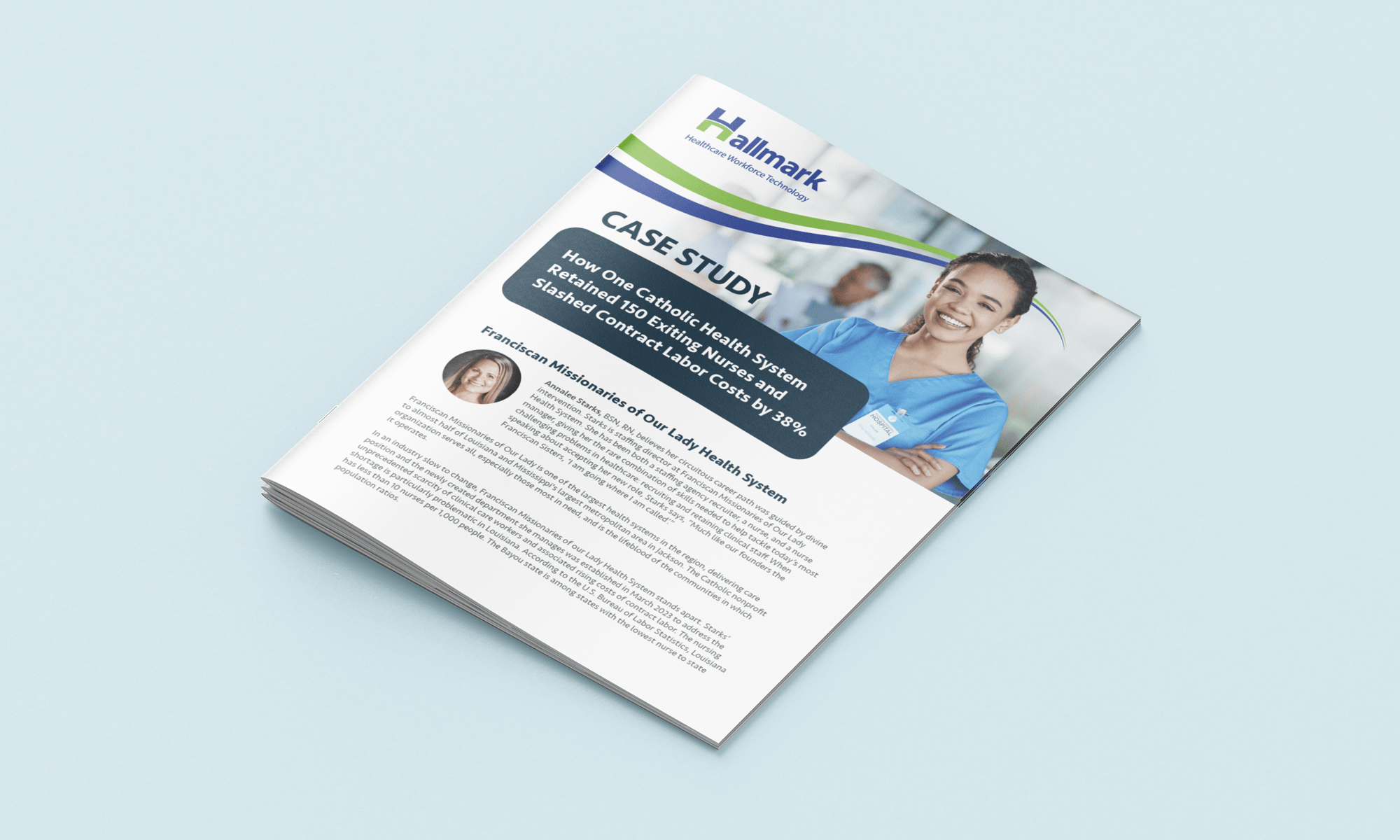
The Franciscan MOLHS internal resource pool case study title page is pictured here.

Reduce Contract Labor Spend While Retaining Staff

By centralizing contingent labor and enabling a more flexible internal workforce model, organizations can reduce contract labor costs without losing clinicians. At Franciscan Missionaries of Our Lady Health System, leaders partnered with Hallmark to streamline labor management, expand internal flexibility, and significantly reduce contract labor spend while retaining nurses who were considering leaving the organization. The result: 38% reduction in contract labor costs.

See Flexible Workforce in Action

Start seeing what’s possible with workforce intelligence, predictive forecasting, and intelligent scheduling built for healthcare.